2023
EVENT TRENDS REPORT
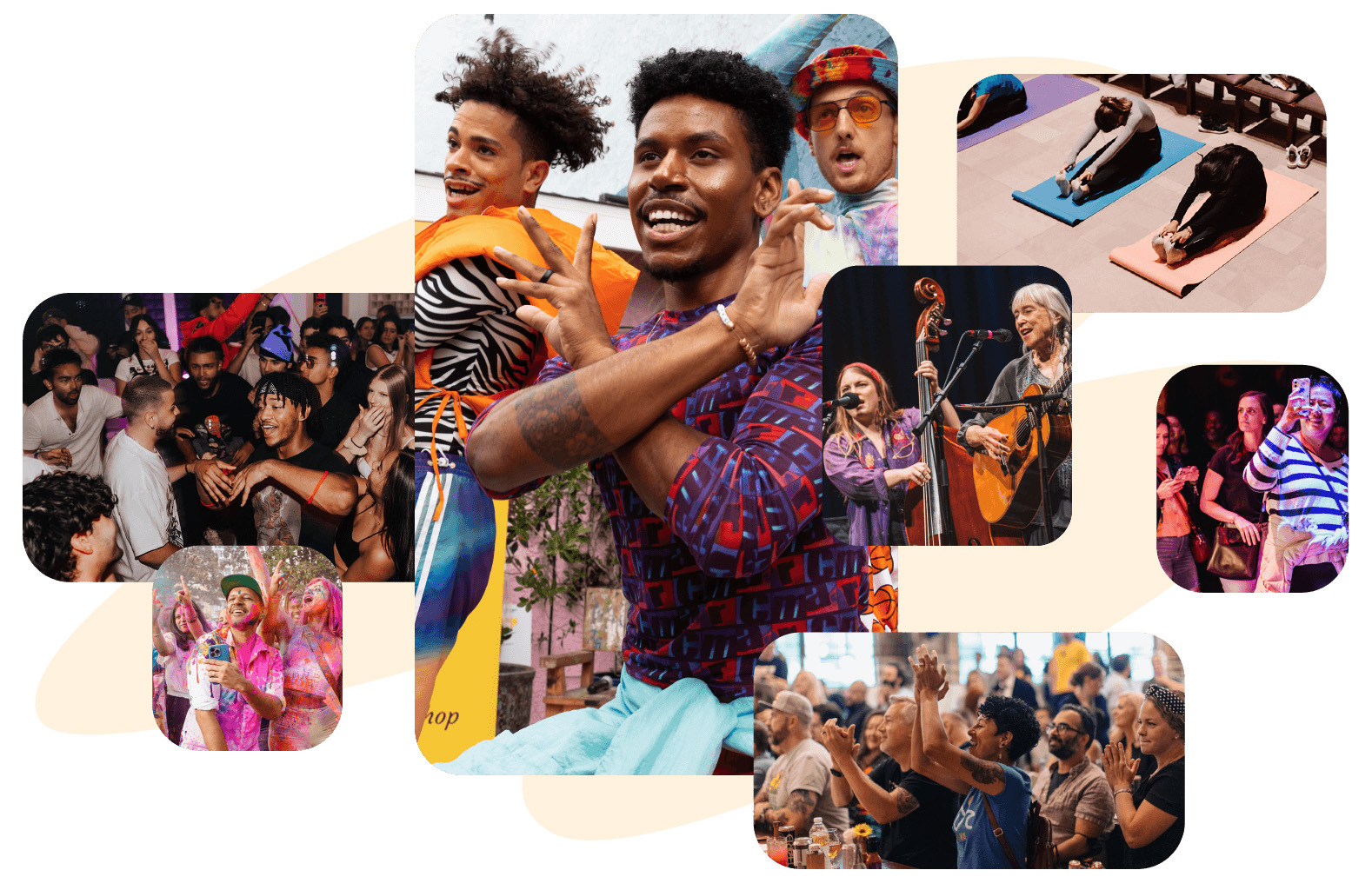
Cautious optimism is the general vibe among event organisers going into 2023, and there is certainly good reason to be hopeful. Among other things, people are keen to attend more events and are moving towards an experiences-over-stuff mentality. At the same time, rising inflation and an all-round shaky economic outlook is keeping organiser expectations grounded in reality.
In late 2022, we ran a survey across the US and Canada, the UK and Ireland, and Australia and New Zealand to find out what event organisers and – for the first time ever – attendees think and feel about the year ahead. A total of 4,474 consumers and 1,581 creators answered our questions, informing some clear emerging trends for post-pandemic event planning. We’ve curated these findings by region to make it extra relevant to local creators.
So, what’s the story in Australia and NZ?
Most of us thought the post-pandemic bounce-back would happen last year, but you probably don’t need us to tell you that uncertainty continued to reign in 2022. COVID breakouts, cancelled travel plans, fluctuating, inconsistent local restrictions, and fear of infection disrupted events and caused people to second-guess social gatherings.
There is a different outlook for 2023. The lifting of travel restrictions in most countries – as well as pent-up demand to get away, attend in-person events, and do back-to-normal things – means getting together in both small and large groups is very much “back” this year.
In fact, the majority (58%) of Australian consumers surveyed said they plan to attend more events this year, and a further 37% expect to attend about the same number as last year. Only a tiny fraction (3%) say they will attend fewer.
Willing to pay more for a good time
More good news: although fears of rising inflation are causing 78% of Australians to tighten their belts in 2023, event spending seems to be an exception. Nearly two in five (39%) Australian consumers said they intend to spend more on events in the year ahead, while over a third (36%) said they will spend about the same. Some of this could reflect expectations around rising costs and ticket prices but, all the same, it’s heartening to know three-quarters of the population is willing to spend as much or more on events this year.
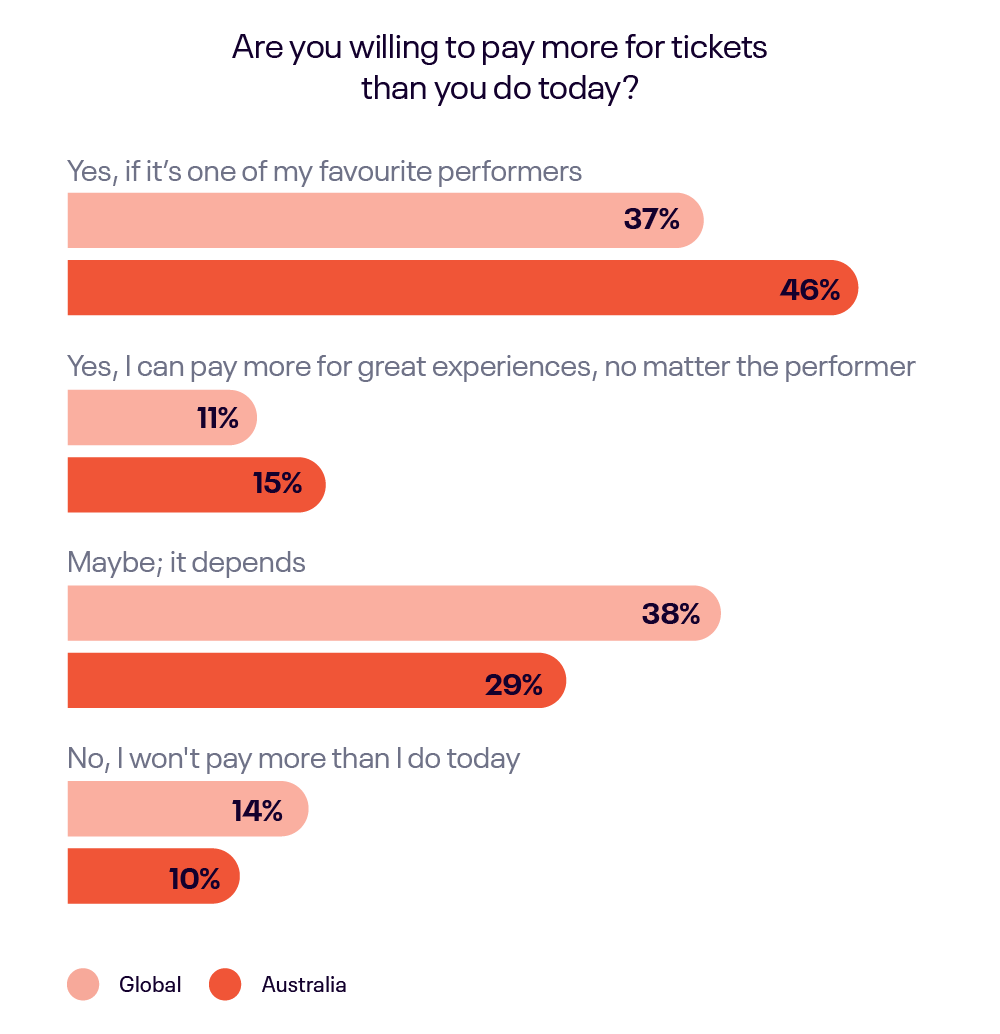
In fact, the overwhelming majority (90%) of Australian music fans expect inflation to drive up ticket prices in 2023, but nearly half (46%) confirmed that they are willing to pay more for their favourite performers. A further 15% are prepared to pay more for great experiences “no matter the performer”, while 29% said they might pay more for gigs – “it depends”. (Presumably on the performer, event location, and other factors or inclusions that might entice them to splurge.)
What do the creators think and feel?
It seems that event organisers can sense that the tide is turning, with 43% of Australian and NZ event creators expecting attendance growth in 2023, and 12% expecting strong growth. Just over a third (36%) think attendee numbers will remain stable.
There are some general concerns about the economy, rising costs, and the impact of inflation on consumer demand among event organisers. But, even so, 26% of Australian and NZ creators feel extremely optimistic going into 2023, and a further 47% are somewhat optimistic.

As one event organiser said, “The appetite for in-person gathering has returned – almost strengthened – and the engagement has steadied despite a possible levelling out post-lockdown. I’m encouraged by the sense of community, as well as the renewed sense of joy that people are feeling through connection and togetherness.”
For attendees, events are places of joy, connection and energy. Perhaps that’s why most Australians (59%) would rather receive a ticket to a live experience than a physical gift. Globally, women seem to especially prefer experiences over gifts, at 64% compared to 55% of men.
Interestingly, many people we surveyed said their best experiences of 2022 were not so much about the performer or the event itself, but about the people they went with or met there. In other words, it seems people are looking for human connection post-pandemic – and, as such, event creators would be wise to double-down on events that promote togetherness.
Here is one Australian event attendee describing going to their first car show as a group: “….it was amazing! It was just so special going together as a close group of friends/family. To have people who share the same passion with you at an event is really special.”
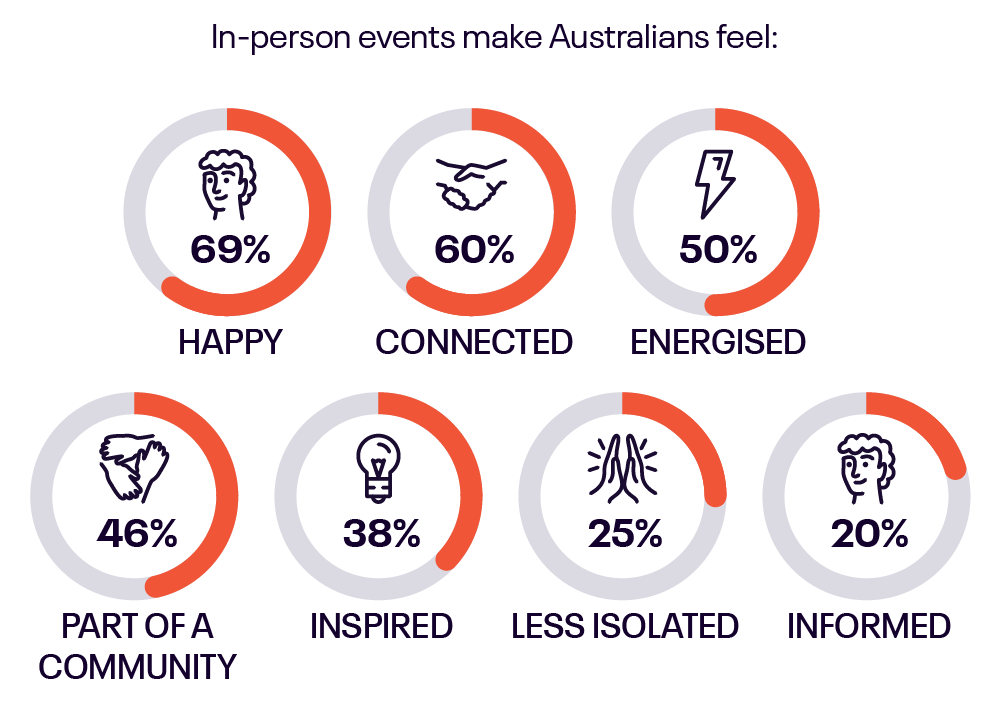
Bear in mind, however, that 19% of Australians also said events can stoke anxiety, and Gen Y and Gen Z are the most likely to feel this way. This begs the question of what creators could do to help reduce people’s anxiety – for example, through pre-event communication and designated chill-out zones.
Event organisers vs experience creators
One in four (25%) Australian and NZ event creators strongly agrees that what they do is less about producing events and more about designing experiences, and a further 44% somewhat agree.
It could be tech-free experiences, which give attendees a chance to immerse themselves in activities with more presence. Or it could be a transformative experience that focuses on growth, renewal and spirituality. Pretty much any event can be turned into an “experience” with a little attention to detail and by playing up the aspects you most want to resonate with attendees. For example, the sights, the sounds, the tastes, the textures, or themes such as community, decadence, connection to nature, or a change of perspective. Really, what it comes down to, is the art of creating lasting impressions and memories.
“We make our events all about the experience with creative workshops, sound healings, kids workshops, free gin tastings, live music, psychic readers and fashion shows. Our visitors stay and make a day of it, it is so much more than just a market.”
— Danielle Djokic, creator of the Boho Luxe Markets.
Post-pandemic, almost one in four (24%) Australians surveyed said they “almost always” or “often” feel socially isolated and/or lonely, and another 38% “sometimes” do. But going to in-person events helps – nearly two-thirds (62%) of Australian respondents agreed that it makes them “feel less isolated/lonely”.
As one Australian event attendee says, “My first live concert after COVID lockdowns, I was anxious to be out but what an incredible vibe. Seeing how happy it made everyone and myself was just amazing. Such a different vibe to pre-COVID – it’s like everyone took a deep breath of freedom and enjoyment.”
The top challenges for community-building creators
Most Australian and NZ event creators agree that growing a community/following is either extremely important (41%) or very important (37%). But it’s not without its challenges.
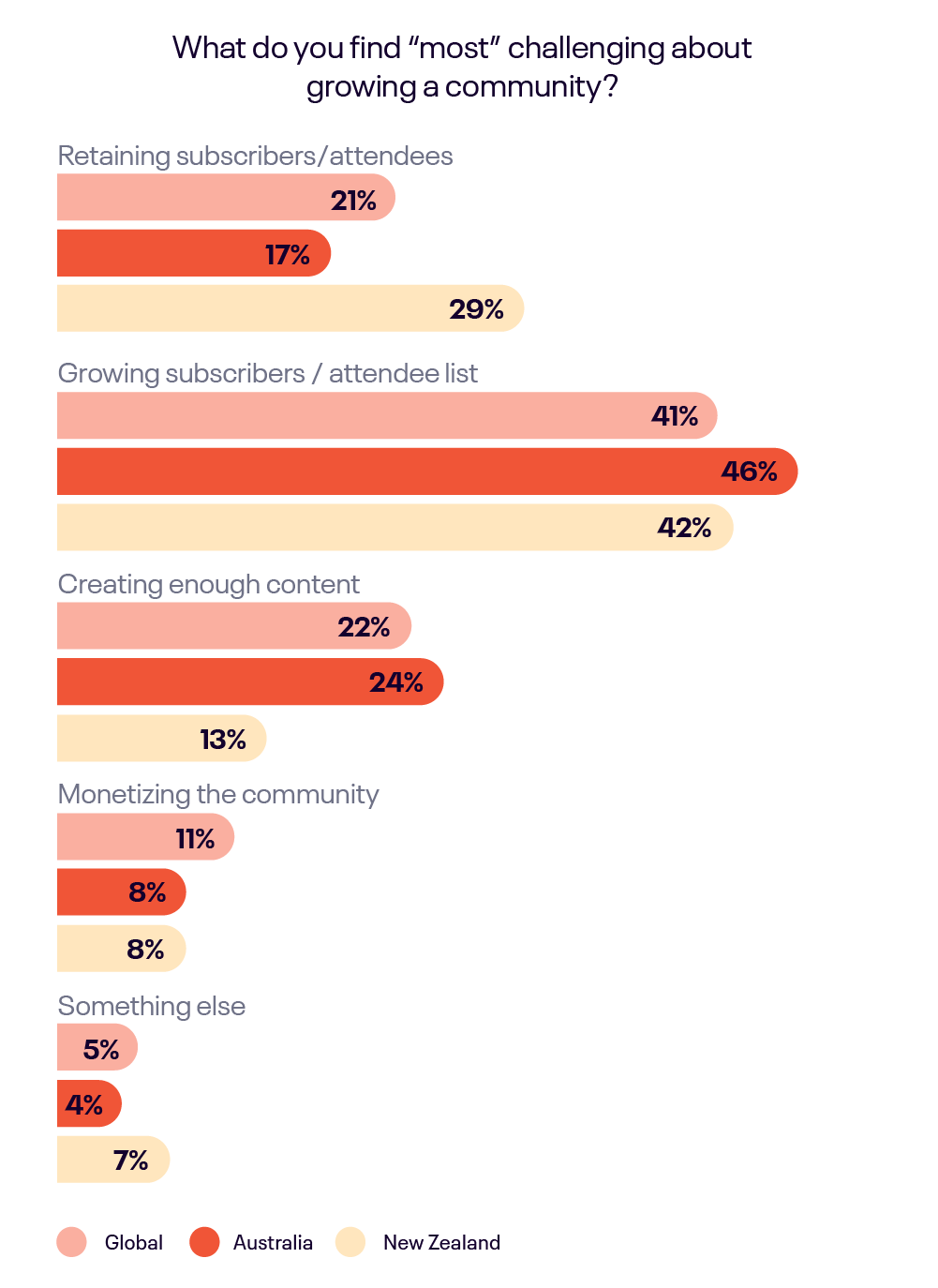
Interestingly, 14% of Australian and NZ event creators also found data/information security to be one of the biggest challenges of community-building. This is likely to become more of a concern in years to come, given a spate of recent high-profile hacking incidents.
Despite the challenges, “building community and connection” was the main reason Australian and NZ creators gave for organising events, with a response rate of nearly 26%. The second-most common reason was “Education/training” at just over 18%.
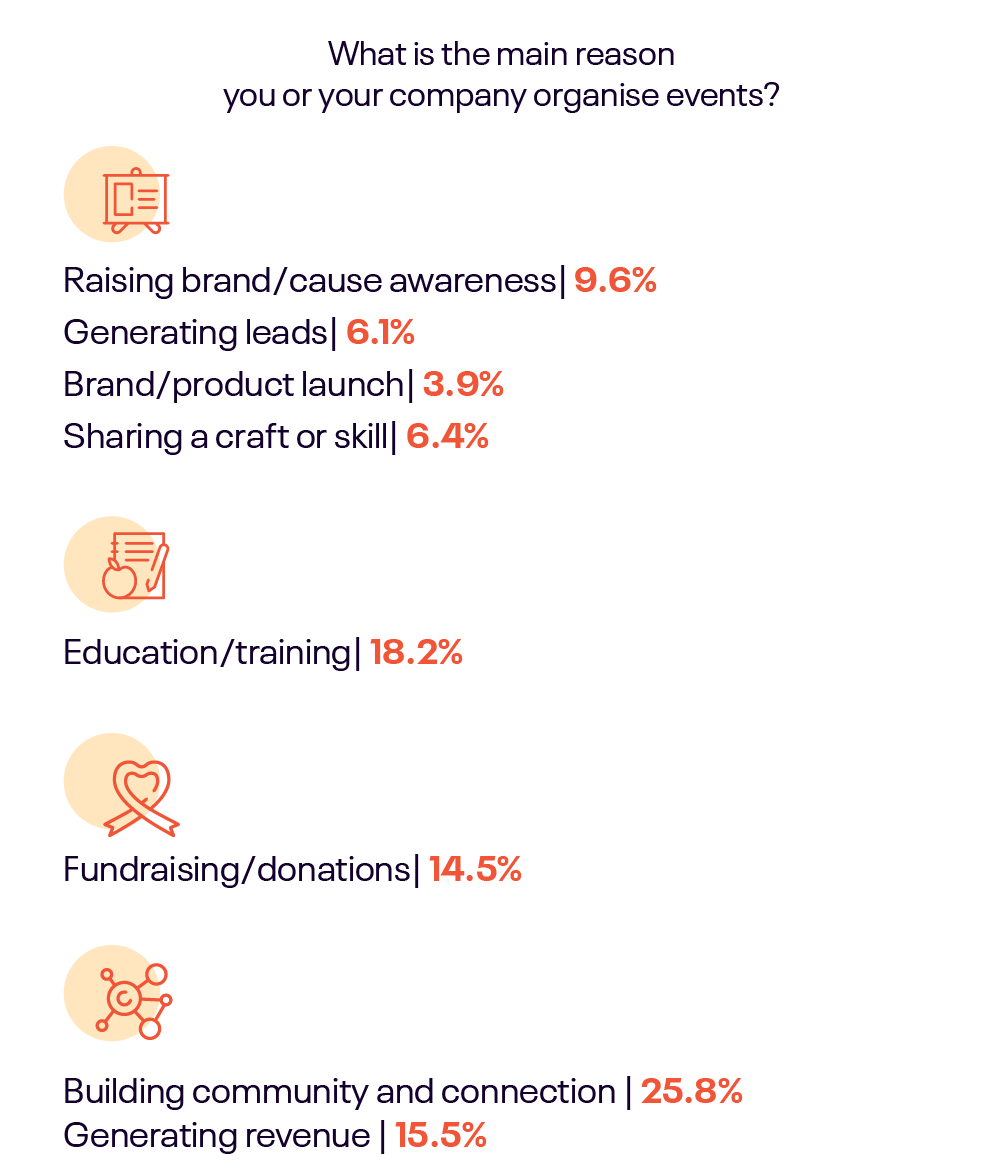
As one event creator said, “I feel optimistic about the sense of community and comradery that builds because of my events – connecting with people who are passionate about the same thing as I am, and seeing strangers become friends.”
In Australia and NZ, the most common source of event revenue comes from tickets purchased online in advance (selected by 41% of respondents), followed by Grants/Donations (34%) and then tickets bought in-person on the day of the event (33%).

Given the rocky economic environment, some event organisers plan to experiment with diversifying their revenue streams in 2023. For example, by:
In 2023, event creators will have to be even more savvy in their marketing, since they are competing for online attention against a wide range of other creators and companies.
Asked their most effective promotional tools in 2022, Australian and NZ creators most commonly selected the following responses:

Missed opportunity?
Social media isn’t only about promoting events. It has also become an event destination in and of itself. Event creators can now use Facebook Live, Instagram Live or TikTok Live to stream events for fans and engage with them in real-time – an especially good tactic for those seeking to attract younger audiences.
However, it’s possible event creators are yet to unlock the full potential of this marketing strategy. Only 13% of Australian and NZ event creators said live-streaming was among their most effective promotional tools in 2022.
Top Tip
Housing all your marketing tools in one place helps streamline your promotional activity and drive impact. James Harding of BeerFest Australia used Eventbrite Boost when promoting his events in 2022 and saw results:
“We’ve lifted our sales by 35% since using Eventbrite Boost. It’s a great result that we’ve been able to achieve.”
Events for introverts
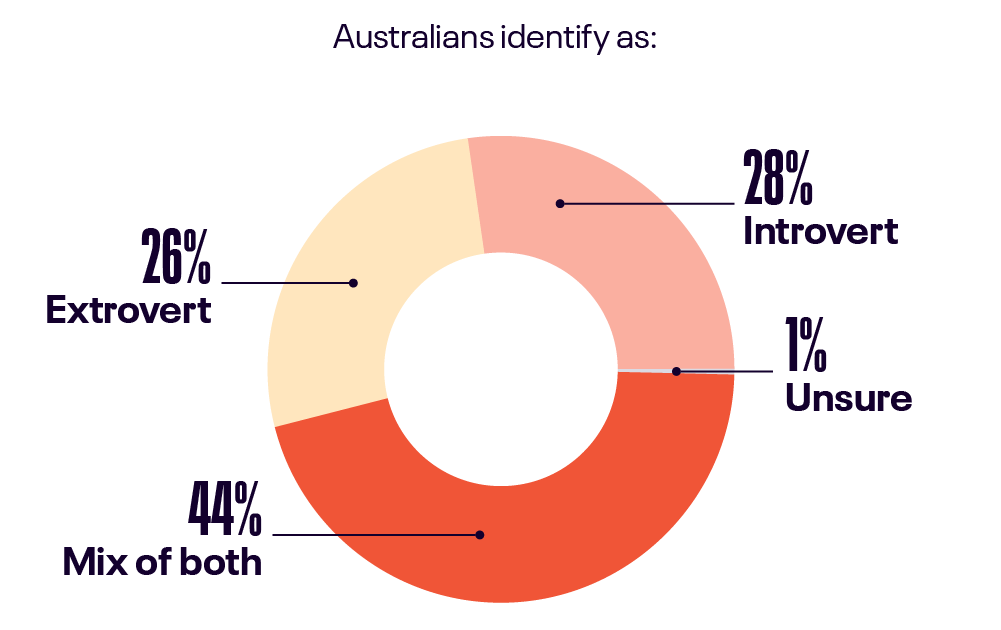
Over a quarter (28%) of Australians surveyed identify as introverts, which is just shy of the global average of 30%. (For the survey, we defined the terms as: “Extroverts tend to feel energised by social time with others; introverts tend to prefer spending time alone or in small groups.”)
Finding ways to cater to such a large portion of the market is important for event organisers, since one in five (19%) global respondents said they avoid live events due to introvert tendencies.
Consciously catering to this type
It’s worth noting that introverts behave very differently to people who identify as extroverts or a “mix of both”. For example, when asked what they want to do more of in 2023, introverts were more likely to say “spend time on hobbies”, which opens up some rich potential for hobby-related events.
 Introverts also prefer intimate settings, locations they’re familiar with, and events closer to home. They want to stick with friends rather than meet new people, and are less comfortable trying out new experiences. More than two in three introverts said they avoid in-person events because it involves socialising and/or meeting new people.
None of this is particularly surprising, but it does raise some interesting questions for event creators about how they can intentionally cater to introverts and help reduce their anxiety. For example, by creating spaces for them to take breaks and decompress, through communication strategies, and by consciously creating a welcoming and reassuring environment upon arrival.
Interestingly, introverts weren’t any more likely to attend virtual events than extroverts, but they were more likely to say virtual events were less triggering of their social anxiety.
Do you know who your “Essentialists” are?
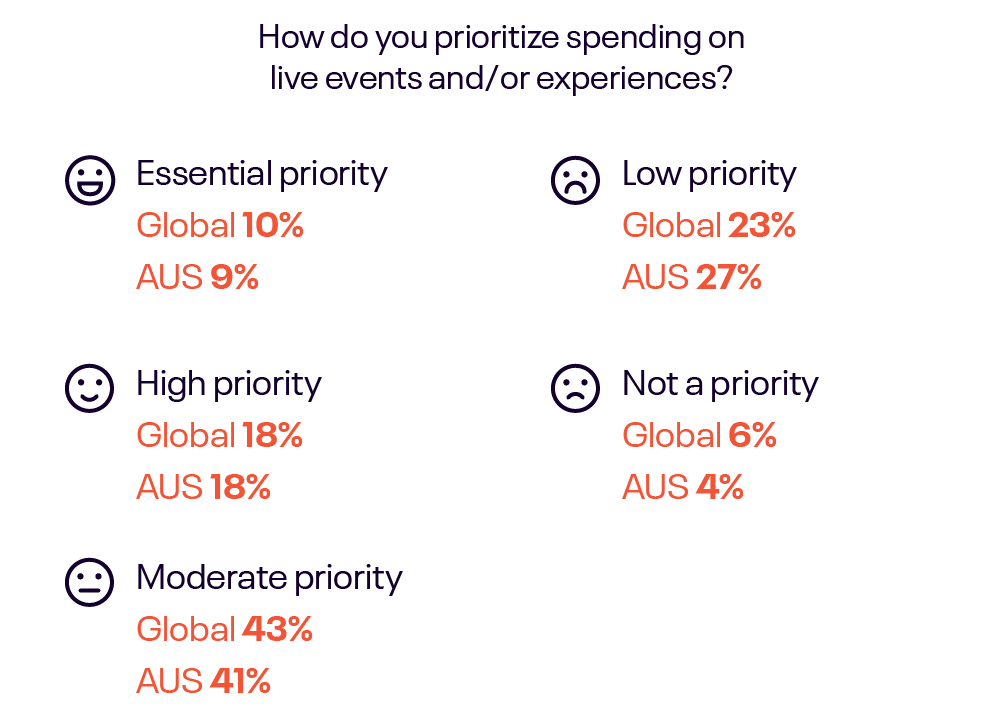
A small portion of people we surveyed said spending on live events is an “essential priority”. These people are high-value fans, and it’s worth building special outreach programs to attract them.
What makes “Essentialists” unique?
Essentialists are more likely to say they’ll spend more on events in 2023 (45%, compared to 30% global average). Essentialists are also more likely to be introverts (32%) than extroverts (26%) – surprising but true.
Music isn’t the only thing Essentialists connect with: they’re much more likely to embrace 5k walks/runs, spiritual events, networking, speed dating and silent discos. Again, for event creators that serve these niches, it’s worth paying special attention to this high-value crowd.
Virtual events are no longer a pandemic-induced workaround but rather an attractive option for attendees – and a critical way to grow your overall attendee base.
With restrictions mostly in the rear-view mirror, the number and size of virtual events will likely shrink, but not as drastically as one might expect. In fact, 70% of Australians plan to attend more or the same number of virtual events this year (32% and 38%, respectively).
Interestingly, a significant portion of creators in NZ (41%) and Australia (31%) charge the same price for virtual events as they do for in-person ones. This suggests that those who aren’t making the most of virtual events could be missing out on an important revenue opportunity.


Overall, the Australian and NZ event creator and attendee responses were more or less consistent with global trends, although there were a couple of notable exceptions.
Globally, the “experience economy” is the big idea for 2023, with event creators focused on delivering surprising, delightful, must-return experiences. Two in three event creators around the world think their job is less about producing events and more about designing experiences, and this mindset change has serious implications for all event planners. As people become more cut off from one another, the demand for experiences over things will continue to grow – and event creators are perfectly positioned to fill this demand. (Event organisers in the US are the most on board this train, with 43% strongly agreeing that they are designing experiences, compared to 25% of creators in Australia and New Zealand.)

Another point of note is that creators in the UK and Ireland are significantly less optimistic than other regions about economic and business conditions. In the UK, perhaps due to political turmoil and on-going confusion around Brexit’s implications for small businesses, the majority (55%) of respondents say conditions are getting worse – the highest level in any country we surveyed. Ireland, while not as pessimistic as the UK, also appears to be bracing itself for tough times, with 46% of creators expecting conditions to worsen over the next 12 months. (The global average was 37%, in Australia it was 36%, and NZ 28%.)
A few other global trends leave us with food for thought. For example, despite 55% of event creators expecting an increase in attendance in 2023, only 44% say their budgets per event will grow. In fact, budgeting was the top-cited challenge this year among event creators globally (at 32%), ahead of “reaching attendees” (27%) and “increased competition” (23%).
It’s somewhat surprising that so many event budgets aren’t projected to increase given rising inflation and costs. It’s possible that creators plan to make up for any potential shortfall by increasing admission, and indeed 42% of those we surveyed do expect to see ticket-price growth in 2023. In light of this, it’s reassuring that nearly a third (30%) of global consumers are prepared to spend more on events next year. Perhaps because 27% of people around the world say they “almost always” or “often” feel isolated and lonely, and there is a renewed appreciation for social connectedness as well as a general trend towards experiences-over-things post-pandemic.
Globally, younger people are the keenest of all to get back to events. Just over 61% of Gen Y and 63% of Gen Z respondents say they’ll be at more events and/or live experiences in 2023, compared to 42% of Baby Boomers and 52% of Gen X.
Conclusion
With the lifting of travel restrictions, renewed appreciation for gathering in groups, and general hunger for experiences, 2023 looks set to be a cracking year for the events industry. And creators can clearly feel the excitement brewing. Globally, nearly a third (30%) are extremely optimistic about events in 2023, and that figure rises to 74% when we include those who are “somewhat optimistic”.
After everything we’ve gone through the past few years, to see so much hope, resilience and enthusiasm is a beautiful thing in and of itself. We sincerely hope that it is rewarded and that 2023 is good to you!
Feeling inspired and ready to host your next event? We’d love to help. Contact our events team or call us on (+61) 1800 934 125.